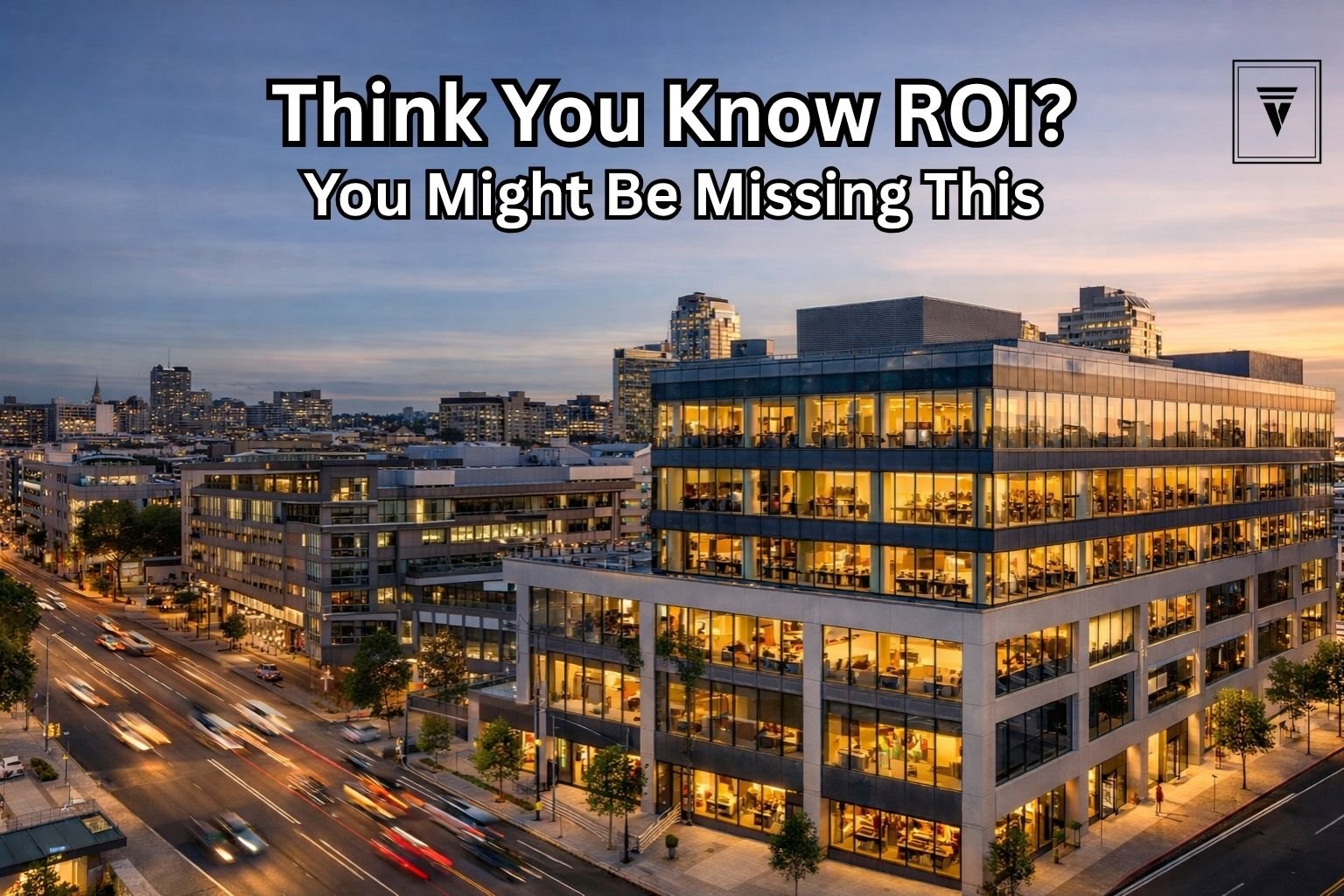
Hidden ROI Factors Most Investors Ignore in Commercial Real Estate
Vintage Vista brings you a deep dive into one of the most overlooked areas of property investing—hidden ROI drivers in commercial real estate. While most investors focus on obvious metrics like rent, location, and appreciation, the real game-changers often sit quietly in the background, unnoticed. And interestingly, these are exactly the factors Most Investors Ignore, which can dramatically impact long-term profitability.
Commercial real estate in 2026 is no longer just about owning a prime location and waiting for appreciation. Today’s smart investors focus on data-driven decisions, operational efficiency, and tenant-centric strategies to maximize returns. Many investors still overlook important factors that can significantly improve long-term ROI and create sustainable commercial property value over time.
Let’s explore these hidden ROI factors in detail.
1. Tenant Quality vs. Rental Yield (The Silent Profit Driver)
Most investors are obsessed with high rental yield numbers. But what they often miss is the quality of tenants occupying the space.
A high-paying tenant who defaults or vacates frequently can cost more than a slightly lower-paying stable tenant. Strong corporate tenants ensure:
- Consistent rental income
- Lower vacancy rates
- Reduced maintenance disputes
- Higher resale value of the property
At Vintage Vista, we’ve observed that properties with stable tenants often outperform higher-rent, unstable assets over a 5–10 year horizon.
This is one of the biggest reasons Most Investors Ignore tenant profiling during acquisition.
2. Micro-Location Advantages Within Macro Locations
Everyone says “location matters,” but very few analyze micro-location dynamics.
For example, within a single sector or commercial hub, ROI can vary drastically depending on:
- Entry and exit accessibility
- Visibility from main roads
- Footfall concentration points
- Proximity to anchor tenants or malls
A shop located 200 meters inside a commercial complex may earn significantly less than one facing the main road—even if both are in the same project.
This subtle difference is another factor Most Investors Ignore, leading to mispriced assets and missed opportunities.
3. Maintenance Efficiency and Operating Costs
While investors calculate gross rental income, they often ignore net operational efficiency.
Hidden costs include:
- Property management fees
- Common area maintenance (CAM) charges
- Repair cycles
- Utility inefficiencies
- Security and staffing overheads
Over time, these can eat into 15–25% of total returns.
At Vintage Vista, we emphasize analyzing net ROI, not just top-line rent. Two properties with identical rents can produce completely different profits based on operating costs alone.
4. Brand Tenant Impact on Capital Appreciation
Anchor tenants like banks, retail brands, or multinational offices significantly increase a property’s valuation.
Why?
Because they bring:
- Credibility to the project
- Higher investor confidence
- Increased foot traffic
- Stronger resale demand
However, many investors fail to account for this long-term appreciation effect.
This is a classic case of Most Investors Ignore brand value impact while evaluating commercial properties.
5. Exit Liquidity (The Most Underrated ROI Factor)
ROI is not just about earning—it’s about how easily you can exit.
A property with high appreciation but low liquidity can trap your capital. Key liquidity indicators include:
- Number of interested buyers in resale market
- Developer reputation
- Lease structure flexibility
- Market demand cycles
Vintage Vista often advises investors to prioritize liquidity almost as much as rental yield. Because in real estate, exit timing can define your entire profit cycle.
6. Lease Structure Optimization
Most investors accept standard lease agreements without optimization. However, lease structure can significantly impact returns.
Key elements include:
- Escalation clauses (5–15% annually)
- Lock-in periods
- Maintenance cost sharing
- Revenue-sharing models (for retail spaces)
A poorly structured lease can reduce long-term ROI by a huge margin, even if the rent looks attractive initially.
This is another sophisticated detail Most Investors Ignore, especially new entrants in commercial real estate.
7. Demand Cycles and Market Timing
Commercial real estate moves in cycles—expansion, saturation, correction, and recovery.
Investors often buy without considering:
- Current supply pipeline in the area
- Upcoming infrastructure developments
- Business district migration trends
- Economic growth cycles
Buying during saturation phases can lock capital for years, while entering early growth phases can multiply returns significantly.
At Vintage Vista, we always emphasize timing as a hidden ROI accelerator.
8. Tax Efficiency and Depreciation Benefits
Many investors overlook the tax side of ROI entirely.
Commercial real estate offers:
- Depreciation benefits
- Interest deductions on loans
- Operating expense write-offs
When structured correctly, tax savings can significantly improve net yield.
Unfortunately, this is another factor Most Investors Ignore, leading to underperformance compared to optimized portfolios.
9. Technology and Smart Infrastructure Value
Modern commercial properties equipped with:
- Smart access systems
- Energy-efficient designs
- Automated security
- Digital leasing systems
tend to command higher rents and better tenants.
Yet many investors still focus only on physical structure, ignoring tech-enabled efficiency.
Vintage Vista has seen tech-integrated properties outperform traditional ones in both rental stability and appreciation.
10. Reputation of the Developer and Project Ecosystem
Finally, one of the strongest but underestimated ROI drivers is developer credibility.
A strong developer ensures:
- Timely project delivery
- Better tenant attraction
- Higher resale confidence
- Lower legal and structural risks
Investors often ignore this and focus only on price per square foot.
But in reality, reputation can influence long-term returns more than initial pricing.
Final Thoughts
Commercial real estate success is not just about buying property—it’s about understanding the invisible forces that shape long-term value.
From tenant quality and lease structuring to micro-location advantages, asset appreciation potential, rental sustainability, and liquidity, these often overlooked but crucial factors ultimately determine whether a real estate investment performs in an average range or becomes truly exceptional.
At Vintage Vista, we believe the smartest investors are those who look beyond surface-level numbers and dive into these deeper ROI drivers. Because in reality, the factors Most Investors Ignore are often the ones that create the biggest wealth gaps in the long run.
If you’re planning your next commercial investment, don’t just ask “how much rent?”—ask “what am I missing?”
That simple shift in thinking could be the difference between average returns and extraordinary growth.
.png)
.png)
.png)
.png)
.png)
.png)
.png)
.png)
.png)
.png)
.png)
.png)
.png)
.png)
.png)
.png)
.png)
.png)
.png)
.png)
.png)
.png)
.png)
.png)
.png)
.png)
.png)
.png)
.png)
.png)
