Construction Debris from 2,000 Mumbai Redevelopment Projects ‘Goes Missing’; BMC Halts Fresh Permissions
Mumbai: In a major environmental lapse, construction debris from nearly 2,000 redevelopment projects across Mumbai has reportedly failed to reach designated dumping grounds, according to findings from a civic investigation by the Brihanmumbai Municipal Corporation (BMC).
Officials revealed that developers had listed the same seven disposal sites for thousands of projects — an anomaly that triggered scrutiny. “There was no way such a massive quantity of debris could fit into just seven locations,” a senior civic official stated. A probe initiated in December found that the debris never reached the designated sites.
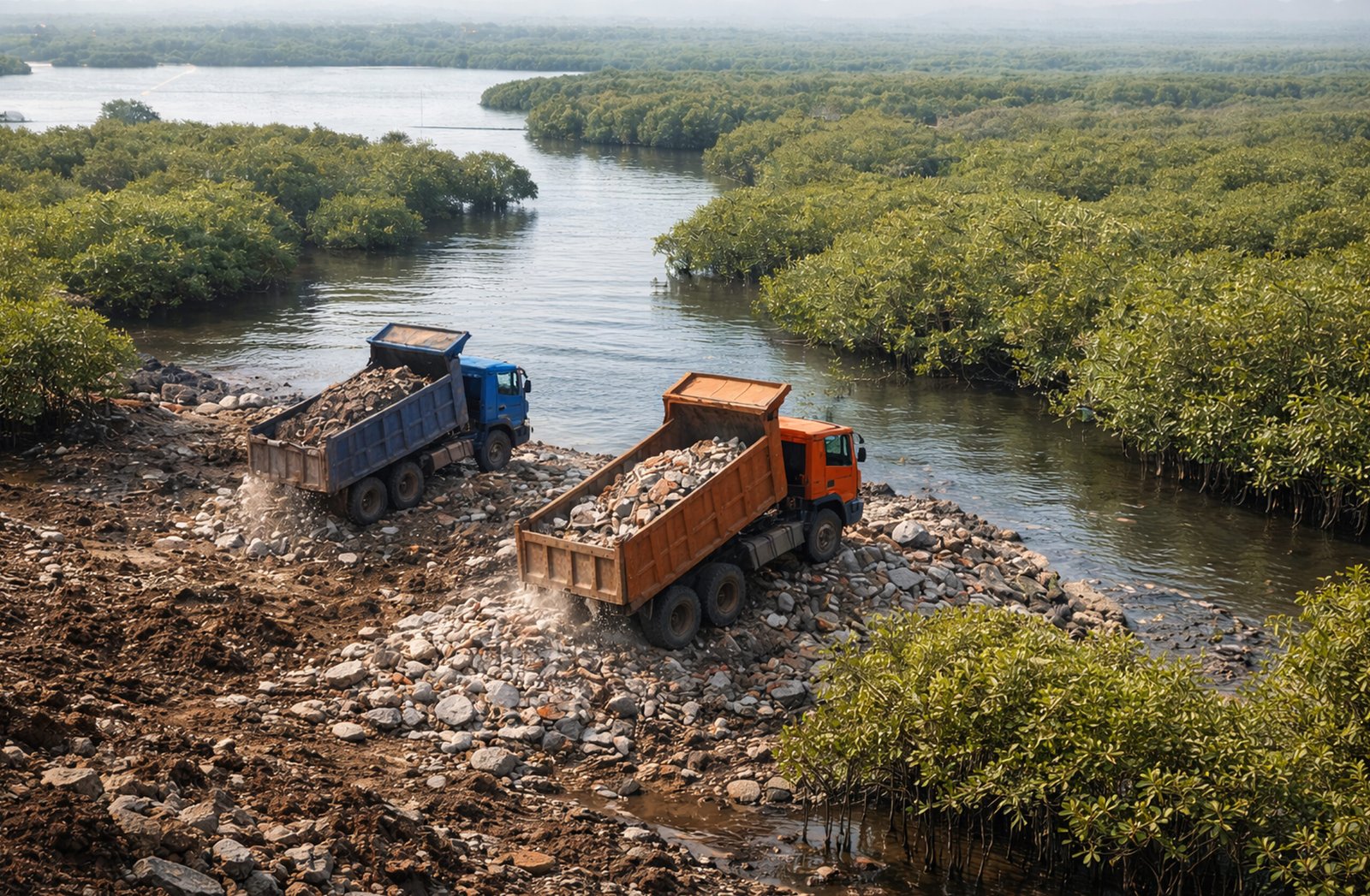
Suspected Illegal Dumping of Construction Debris in Mangroves
Environmentalists allege that contractors diverted the missing debris and sold it to land mafias for illegal encroachments. Many suspect illegal dumping in sensitive mangrove belts and wetlands across Mumbai.Activists say western suburbs such as Malvani and Versova creek areas often face illegal dumping. Isolated coastal stretches have also reported similar violations. Concerns have resurfaced in Aarey Colony after fresh cases of mud and rubble dumping last year.
Environmental experts warn that illegal dumping poses a serious ecological threat. Mangroves act as natural flood barriers and protect coastal zones from tidal surges. When people fill wetlands and creeks with debris, they damage the city’s drainage system. This increases flood risks during the monsoon season.
BMC Tightens Rules on Construction Debris Disposal
In response, the Brihanmumbai Municipal Corporation has made agreements with authorized recycling plants in Dahisar and Kalyan mandatory. Developers must sign these contracts before seeking construction permissions. Due to this rule, authorities have temporarily halted 400–500 redevelopment projects. A senior official from the Building Proposal Department confirmed that officials will grant fresh approvals only after developers submit signed disposal agreements with the two approved recycling facilities.In response, the BMC has made it mandatory for developers to enter into formal agreements with authorized recycling plants in Dahisar and Kalyan before obtaining construction permissions. As a result, approximately 400–500 redevelopment projects have been temporarily halted.
A senior official from the Building Proposal Department confirmed that fresh approvals will not be granted until developers sign disposal contracts with the two approved recycling facilities.
Builder Association Reacts
The Builder Association of India has welcomed the stricter oversight but raised concerns over possible lapses at the contractor level. Industry representatives noted that while builders typically appoint third-party contractors for debris disposal, illegal dumping could not occur without local-level complicity.
Financial Incentives Behind Illegal Dumping
A retired civic official disclosed that contractors could earn between ₹15,000–20,000 per truckload for illegal dumping. By avoiding long-distance transportation to authorized sites in Raigad district, contractors allegedly profited twice — charging builders for legitimate disposal while illegally offloading debris closer to the city.
Environmental and Urban Impact
Environmentalists have demanded a detailed investigation into the contractor network linked to slum formation and illegal land encroachments after debris dumping. In several areas, people first dumped rubble and later built hutments on the same land. This pattern suggests a larger land-grab nexus.
Urban planners warn that damage to mangrove ecosystems can cause irreversible harm to Mumbai. Rising climate volatility and growing urban density could worsen the impact.
The Bigger Picture
This development raises serious concerns about accountability in Mumbai’s redevelopment boom. Redevelopment plays a key role in urban renewal and infrastructure growth. However, authorities must enforce stricter compliance rules. They must also ensure transparent waste management systems. Without strong oversight, rapid growth can damage the environment.
Vintage Vista News Desk
For more insights on urban development, policy updates, and real estate accountability, stay tuned to our News section.
.png)
.png)
.png)
.png)
.png)
.png)
.png)
.png)
.png)
.png)
.png)
.png)
.png)
.png)
.png)
.png)
.png)
.png)
.png)
.png)
.png)
.png)
.png)
.png)
.png)
.png)
.png)
.png)
.png)
.png)
